





























Tailored security measures for higher education institutions
Security measures within higher education institutions must be precisely tailored to meet unique needs and operational demands across various departments. For units handling hazardous materials, controlled substances, or valuable assets, compliance with safety standards is paramount. Certified security professionals are essential for implementing customized physical security solutions tailored to mitigate specific risks and exposures.
Strategic deployment of physical security technologies i
The strategic deployment of physical security technologies, including access control and video surveillance systems, is crucial to safeguard property and ensure the safety of students, faculty, and researchers within these specialized educational units. By integrating these solutions, facility managers can enhance security protocols and mitigate potential risks effectively.
Concentric circles of security approach
Discover the strategic "Concentric Circles of Security" approach designed to enhance safety in higher education, particularly within research labs and sensitive areas. This model employs layered security, with each level acting as a barrier that potential intruders must breach to access critical zones. Beginning with perimeter fencing, lighting, and patrols as the outermost circle, security measures progress inward with access control systems, surveillance cameras, and intrusion detection. At the core, stringent measures like biometric access and secure communications safeguard sensitive information. This comprehensive approach minimizes successful security breaches by protecting valuable assets across multiple security levels.
How concentric circles work
This approach is anchored in several key principles designed to fortify security in higher education and research environments. Discover the significance of layered defense, implementing least privilege access, continuous detection and monitoring, utilization of physical and technological barriers, and dynamic adaptation to evolving threats.
Security for critical areas
Discover the importance of smart security cameras in preserving high-value artifacts and archives, supporting educational endeavors, and protecting against targeted theft. Specialized security measures are also highlighted for laboratories handling hazardous materials, addressing specific risks and ensuring the safety of researchers and the community.
Enhancing safety in higher education
Explore essential practices for enhancing safety and security in susceptible divisions of higher education institutions. Conducting thorough risk assessments and threat analyses establishes a proactive security framework, identifying and addressing potential risks comprehensively. Developing a focused security plan integrating physical and cybersecurity measures, regularly updated and integrated into daily operations, fosters a culture of safety. Implementing stringent employee screening, including advanced visitor management systems, regulates access to restricted areas. Establishing effective emergency response plans with clear coordination protocols ensures swift reactions to unforeseen circumstances, engaging all stakeholders in proactive safety measures.
The role of a unified security platform
Discover the critical role of a centralized security hub in postsecondary facilities, ensuring comprehensive security and protection of valuable resources. By integrating data from diverse technologies and sensors strategically placed throughout the premises, this unified approach supports administrators in policy formulation, real-time monitoring, threat detection, and investigations. Emphasizing flexibility and scalability, the platform adapts to evolving threats and campus expansions. Consolidating security functions into one system enhances coordination, communication, and efficiency in managing security incidents. Stay tuned to explore key integrated physical security solutions enhancing this robust platform.
Access control
Explore the urgent need for upgrading access control systems in critical areas of postsecondary institutions to contactless technologies. Discover how mobile credential and biometric alternatives are shaping the future of access control for a safer and more secure educational environment.
Intrusion management
Explore the benefits of intrusion detection systems in specialized campus areas, providing essential data for efficient incident response. Centralized management allows for remote monitoring and instant alarms to campus administrators for swift response.
Smart video surveillance
Discover how smart video surveillance systems combat criminal activity and modernize security on campus. Remote access allows real-time monitoring from anywhere, improving responsiveness. Smart systems offer proactive alerts for camera malfunctions, ensuring continuous operation. Explore features like motion-based searches, alerts, and object detection, enhancing collaboration with stakeholders.
Protecting valuable resources
Discover the essential priorities of tracking chemicals and hazardous materials in colleges and universities to ensure safe storage and prevent potential issues. Implementing automated systems, like RFID technology, optimizes inventory management and enhances security. Certified safes and cabinets are crucial for storing valuable items and documents in research rooms and laboratories, offering fire resistance and theft protection. These solutions complement the overall security complex of postsecondary institutions, providing robustness, reliability, and modern design to fit the campus environment.
Enhance safety and security in educational institutions
Discover strategies for tracking chemicals and hazardous materials, optimizing inventory management, and ensuring safe storage practices.
Get My Free Whitepaper
Get the free whitepaper now!
Learn about the importance of protecting valuable resources within research rooms and laboratories
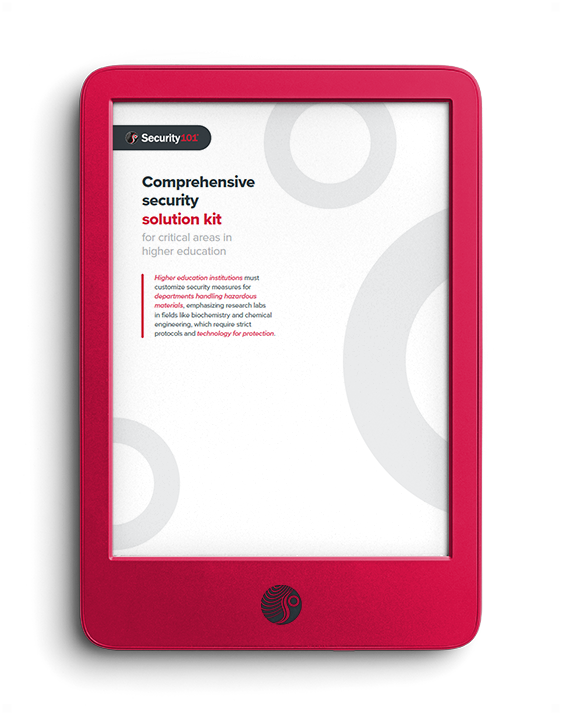
Get the free whitepaper now!Learn about the importance of protecting valuable resources within research rooms and laboratories | |



![visitor-management-[light]](https://go.security101.com/hubfs/2022_Theme/Icons/visitor-management-%5Blight%5D.gif)

![managed-access-control-[light]](https://go.security101.com/hubfs/2022_Theme/Icons/managed-access-control-%5Blight%5D.gif)